Path to value

The fastest, lowest-risk way to measurable value

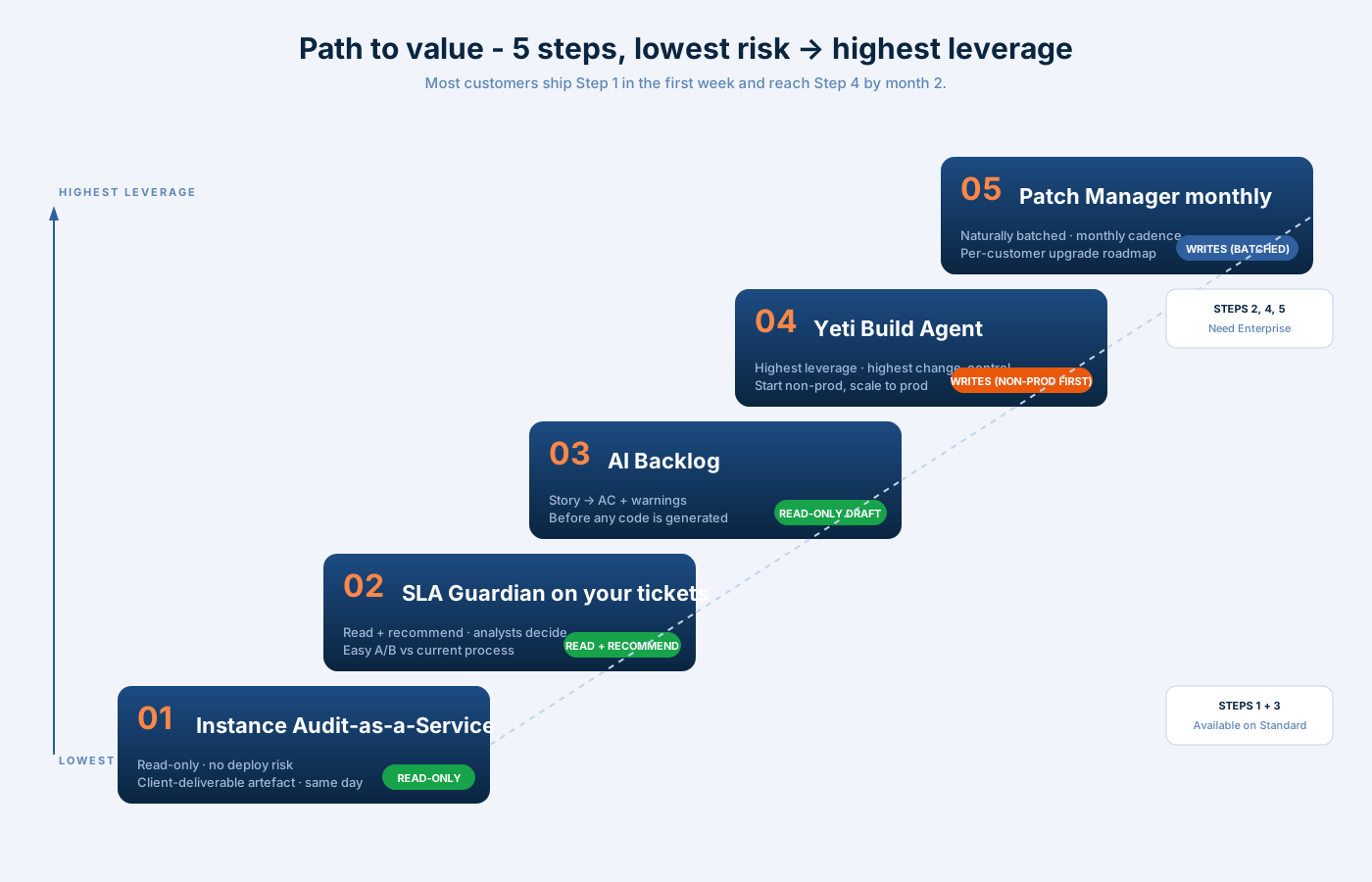
Five steps, ordered from least risk to most leverage. Most customers ship Step 1 in the first week, run Steps 1–3 alongside their existing process, and move to Step 4 only when the team is comfortable.

Path to value ladder: 5 steps from lowest risk (Step 1 Instance Audit-as-a-Service, read-only) to highest leverage (Step 5 Patch Manager). Steps 1 and 3 available on Standard; Steps 2, 4, and 5 require Enterprise.

The 5 steps in detail

01

Instance Audit-as-a-Service

Read-only · no deploy risk · client-deliverable artefact

Run an Instance Audit from the SnowCoder UI against any ServiceNow instance you have OAuth access to. 500+ granular checkpoints across security, technical debt, Flow Designer, performance, integrations, change compliance, version readiness, and CMDB / CSDM health - returned as severity-rated findings with a prioritised remediation list. Nothing writes back to the instance. The audit completes in ~90 seconds.

Best for
MSPs landing the first conversation with a prospect, enterprise platform teams running quarterly governance reviews, anyone preparing for a major-release upgrade.
Deliverable
A scored report you can hand to a client or a CISO.
Time to first value
Same day.
Measurement
Instances scored / month · mean findings per instance · customer remediation rate.
Available on
Standard, Enterprise, Enterprise+. White-glove walkthrough of the first audit included on Enterprise and Enterprise+.
02

SLA Guardian on your tickets

Read + recommend · analysts decide · easy to A/B against current process

Point SLA Guardian at your live ticket stream. It surfaces at-risk tickets before they breach, prioritised by remaining SLA time and severity. The recommendation is read-only - your analysts decide what to escalate. Easy to A/B test: run SLA Guardian alongside an existing queue for two weeks, compare the breach rate.

Best for
MSPs running managed-service desks, enterprise service desks at volume, anyone with ITIL ops.
Deliverable
Daily at-risk-ticket report; weekly breach-rate trend; integration with your existing notification channels.
Time to first value
First day of week 2 (one full week of baseline + one day of comparison).
Measurement
At-risk tickets surfaced before breach · breach-rate delta vs baseline.
Available on
Enterprise and Enterprise+ (SLA Guardian is one of the 8 MSP Agents). Custom routing into your incident workflow on Enterprise and Enterprise+.
03

AI Backlog for tech-debt requirements

Story → acceptance criteria + warnings · before any code is generated

Hand Yeti your tech-debt backlog or a customer's plain-English brief. Yeti drafts AI-optimised user stories with acceptance criteria and surface-area warnings - destructive operations, cross-scope impacts, governance flags - before a single line of code is generated. Cuts the business-analyst cycle: stories your engineers can build to, ready for approval the same day.

Best for
Platform teams pre-PI planning, MSPs ingesting customer briefs, anyone with a long ServiceNow tech-debt list and not enough BAs.
Deliverable
A backlog of build-ready user stories with implementation notes.
Time to first value
~30 minutes per story batch.
Measurement
BA cycle time saved · stories accepted on first review · destructive-change flags raised before code generation.
Available on
Standard, Enterprise, Enterprise+.
04

Yeti Build Agent on net-new scoped apps

Highest leverage · highest change-control overhead · start non-prod

Once Steps 1–3 are running, point the Yeti Build Agent at a net-new scoped app. From an approved AI Backlog story, SnowCoder generates 42 artifact classes via the Fluent SDK, installs to the target instance, and runs the super-audit. Start non-prod for the first 2–3 builds. Move to prod once the team is comfortable with the destructive-change approval gate and the per-AC translation diff that ships with every build. Deep dive: see the dedicated Yeti Build Agent page.

Best for
Developers and platform teams replacing manual scoped-app delivery; MSPs shipping fixed-price customer engagements.
Deliverable
A deployed, audited ServiceNow scope with a per-AC translation diff your customer can sign off.
Time to first value
First non-prod build typically in week 3 or 4 after Step 1.
Measurement
Stories merged per engineer-day · time from approved spec to deployed scope · post-deploy defect rate.
Available on
Enterprise and Enterprise+ (the Yeti Build Agent is an Enterprise-tier feature). White-glove first-build session included.
05

Patch Manager monthly across your estate

Naturally batched · produces an upgrade roadmap deliverable per customer

Run Patch Manager monthly across every instance you manage. It tracks store-app updates, plugin versions, customisation risk per upgrade, and surfaces blockers before a major-release window. Combine with the Upgrade Agent on-demand assessment for the deeper Zurich → Australia readiness review.

Best for
MSPs producing monthly customer reports, enterprise platform teams owning multiple instances, anyone planning a ServiceNow major-version upgrade.
Deliverable
An upgrade roadmap per instance + an aggregated estate-level risk report.
Time to first value
End of the first month.
Measurement
Customisations flagged per upgrade window · % of customers with a current roadmap · time to remediation.
Available on
Enterprise and Enterprise+ (Patch Manager is one of the 8 MSP Agents).

How you know it's working

Every step on the ladder has a small set of measurable outcomes you can track from day one. Pick one or two per step, agree the baseline before you start, and re-measure on a fortnightly cadence.

StepHeadline metricBaseline source
1. Instance AuditInstances scored / month, mean findings per instance, customer remediation rateWhatever the current quarterly governance review produces - usually a Word doc
2. SLA GuardianAt-risk tickets surfaced before breach, breach-rate deltaExisting SLA breach rate over the prior 30 days
3. AI BacklogBA cycle time, stories accepted on first reviewAverage BA hours per story today
4. Yeti Build AgentStories merged / engineer-day, time from spec to deployed scopeAverage velocity per engineer + post-deploy defect rate
5. Patch Manager% of customers with a current upgrade roadmap, customisations flagged per releaseWhatever exists in your current upgrade-planning process - often nothing

Which tier matches which step?

Every step works on every tier. What differs is the depth of service and the procurement path. Full matrix on the pricing page.

If you're starting at

Step 1 (Audit-as-a-Service) only

The right tier is usually

Standard

Because

Token-pack purchase covers a few audits per month. No commitment needed to prove value. Step 1 + MCP access give you the full chat + audit experience on Standard.

If you're starting at

Steps 1–3 (Audit + Yeti chat + AI Backlog drafting)

The right tier is usually

Standard for solo / small teams, Enterprise once you need MSP Agents

Because

Step 1 (basic audit) and Step 3 (AI Backlog drafting through Yeti) work on Standard. Step 2 (SLA Guardian) is one of the 8 MSP Agents and needs Enterprise.

If you're starting at

Step 4 (Yeti Build Agent on net-new scoped apps)

The right tier is usually

Enterprise

Because

The Yeti Build Agent is an Enterprise-tier feature. Adds white-glove onboarding for the first builds and unlimited connected ServiceNow instances.

If you're starting at

Steps 1–5 in production across your team

The right tier is usually

Enterprise (most teams) or Enterprise+ (CSM / 24/7 SLA / HIPAA)

Because

CSS on Enterprise+ pays for itself once you're running 50+ stories / month via the Yeti Build Agent.

If you're starting at

Strategic / regulated / multi-region

The right tier is usually

Enterprise+

Because

Dedicated CSM, EU Sovereign data residency option, pentest report access under NDA.

Not sure where you are on the ladder?

Tell us about your ServiceNow estate, your team, and the one outcome you'd like to see in 30 days. We'll tell you which step to start at and what realistic measurement looks like.